American Mink

Durham-2-Jason-Roach-Photography

Seen, caught or found a mink? Your report can help protect local wildlife.

At Waterlife Recovery Trust, we depend on sharp-eyed people who live, work, and walk near rivers and wetlands to be our frontline in the fight against invasive mink. Your sighting could be the crucial piece of evidence that protects vulnerable wildlife. Even if you’re not certain it was a mink, sharing what you saw – a glimpse, a photo, a few notes – helps us act faster, target our trapping efforts, and build a clear picture of mink activity across your area. Every report strengthens the campaign to remove mink and safeguard our native species, so if you see something that might be a mink, tell us. Every sighting counts.

You can report a live sighting, a mink carcass, or a mink caught in a trap. Choose from the options below that best fits what you observed and we’ll guide you through the details we need.

We treat all reports seriously. Your information will be handled confidentially and only used to support mink control and wildlife protection.
REPORT A MINK SIGHTING

Please tell us where and when you saw the mink, and anything you noticed about its behaviour. The more detail you can share, the better we can judge how urgent the risk is and where to focus action to protect native wildlife. A photograph, even from a distance, is extremely helpful if you can safely take one, as it helps us confirm what you saw and build a clearer picture of mink activity.

Report a mink carcass or capture so we can learn more and respond appropriately.

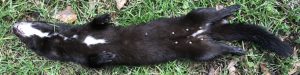
If you’ve found a dead mink, or have caught one in a trap, the information you share can be highly valuable. It helps us understand where mink are present, how they’re moving, and how effective control is in your area.

Identification Guide

American mink can look quite similar to native mustelids such as otters, polecats and stoats, so it is easy to mistake one species for another. This guide highlights the key differences in size, colouring and behaviour to help you tell mink apart from our native wildlife and report the right animal with confidence.

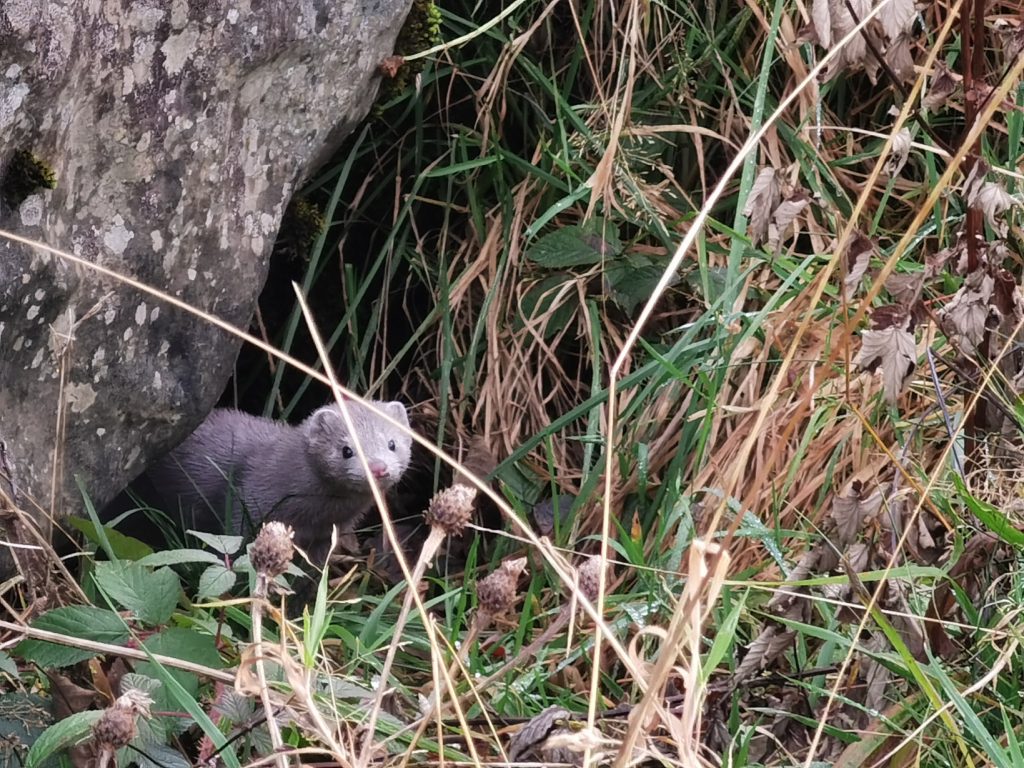
When swimming American mink are only likely to be confused with otters, the other semi aquatic mustelid.  However, otters are much larger and when they swim most of their body is submerged, although some of the tail may be visible. When American mink swim their back is clearly visible above the water.

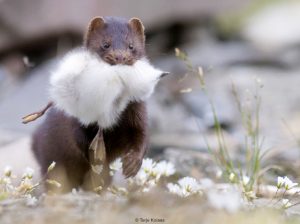
American mink are non-native, semi-aquatic predators introduced to the UK for fur farming, which later established wild populations after escaping or being released. Their presence along rivers, lakes and wetlands has had a severe impact on native wildlife, especially water voles, ground-nesting birds and other small animals, so they are classed as an invasive species and actively controlled to protect biodiversity. Mink are usually dark brown, often appearing almost black when wet, with a long fluffy tail, a small narrow nose and a bright white chin patch (sometimes with extra white on the throat or underside), and are similar in size to a ferret or polecat, smaller than an otter, and larger than a stoat or weasel.

  • Size: Around 45-60 cm (nose to tail)
  • Weight: Around 750-1,500 grams
  • Colour: Typically dark brown, almost black
  • Tail: Long and fluffy when dry
  • Diet: Eats a variety of birds, fish, invertebrates, reptiles, and small mammals, including the endangered water vole

The polecat is a native UK mammal and a close relative of the domestic ferret. Once nearly wiped out, it is now recovering and spreading across much of the country. Polecats are shy, mostly nocturnal, and are often found in woodland, farmland, and along hedgerows. They are known for their dark fur and pale “bandit mask” face markings.

Though sometimes confused with mink, polecats and polecat–ferret hybrids have distinct facial features and a creamy underfur that help distinguish them from mink.

  • Size: Around 50–60 cm (nose to tail)
  • Weight: 600–1,500 grams
  • Colour: Dark brown with creamy underfur and pale markings on the face
  • Tail: Medium length, bushy, and dark
  • Diet: Eats rabbits, small rodents, birds, amphibians, and carrion

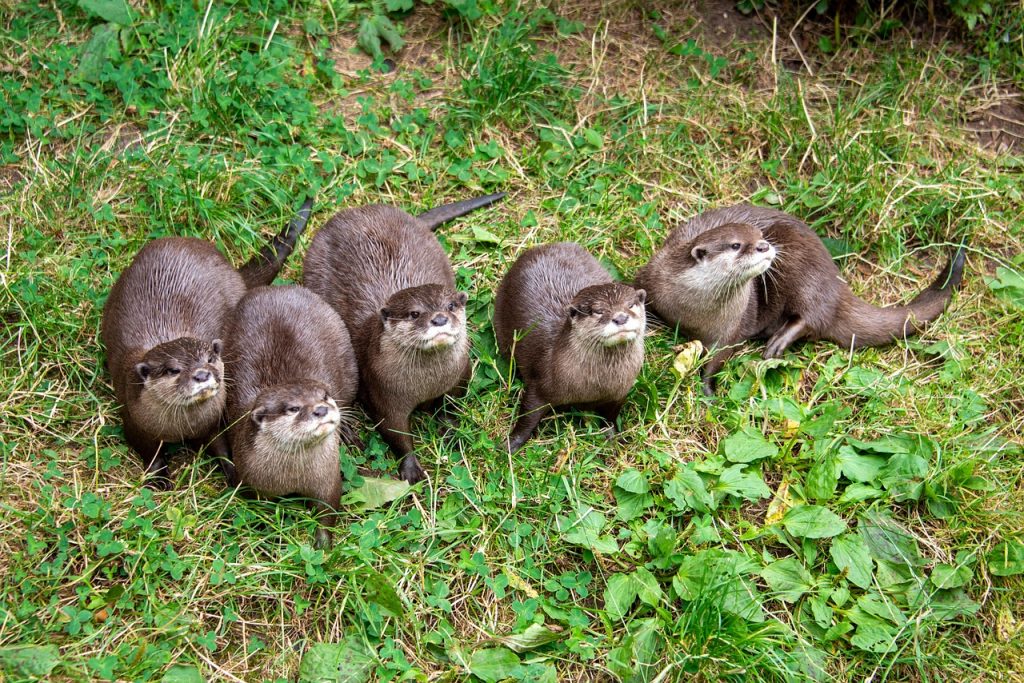
Otters are native to the UK and are often found near rivers, lakes, and coastal areas. They are excellent swimmers with medium brown fur, which can look grey when dry, and a large pale-coloured “bib” down the chest and belly. They have a long tail that’s thick at the base and tapers to a point, short legs, webbed feet, a broad nose, and small ears.

Otters can be mistaken for mink, especially young otters, since both are long and slender with short legs and long tails, and both share the same habitat. However, a fully grown otter is much larger than a mink, roughly twice the length and around ten times heavier.

  • Size: Around 90–130 cm (nose to tail)
  • Weight: Around 7–11 kg
  • Colour: Medium brown fur, but can look grey when dry
  • Tail: Long, thick at the base, and tapers to a point
  • Diet: Feeds primarily on fish (about 80%), but will also eat birds, eggs, insects, and small mammals. During the bird nesting season, the fish portion of their diet may drop to around 50%.

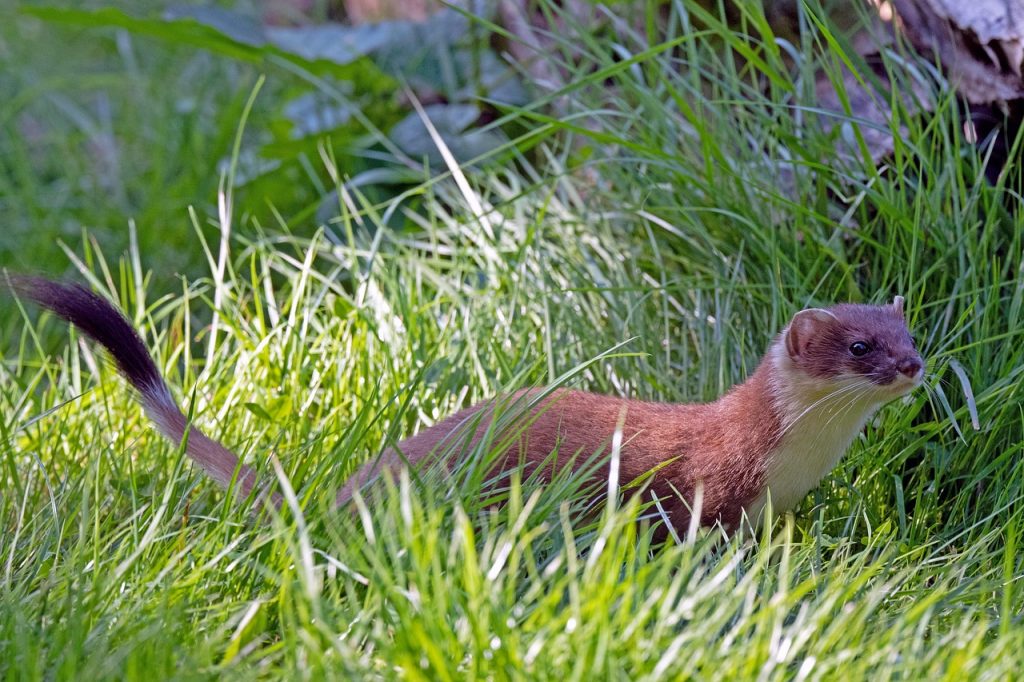
The stoat is a small, agile predator found throughout the UK, known for its sleek body, quick movements, and characteristic black-tipped tail. Often confused with the weasel, the stoat is slightly larger and has a distinctive bounding gait. They are highly adaptable and can be found in a range of habitats, including woodlands, grasslands, hedgerows, and even coastal areas. Though small, they are fierce hunters, capable of taking down prey much larger than themselves.

Stoats can also be mistaken for mink, but they are smaller, and the black tip on their tail is a clear giveaway.

  • Size: Around 30–40 cm (nose to tail)
  • Weight: 150–450 grams
  • Colour: Reddish-brown fur on the back and head, with a creamy white underside; in colder regions or during winter, may turn fully white (called ermine)
  • Tail: Long, with a distinctive black tip that remains even in winter coat
  • Diet: Feeds mainly on small mammals (especially rabbits, voles, and mice), but also eats birds, eggs, and insects

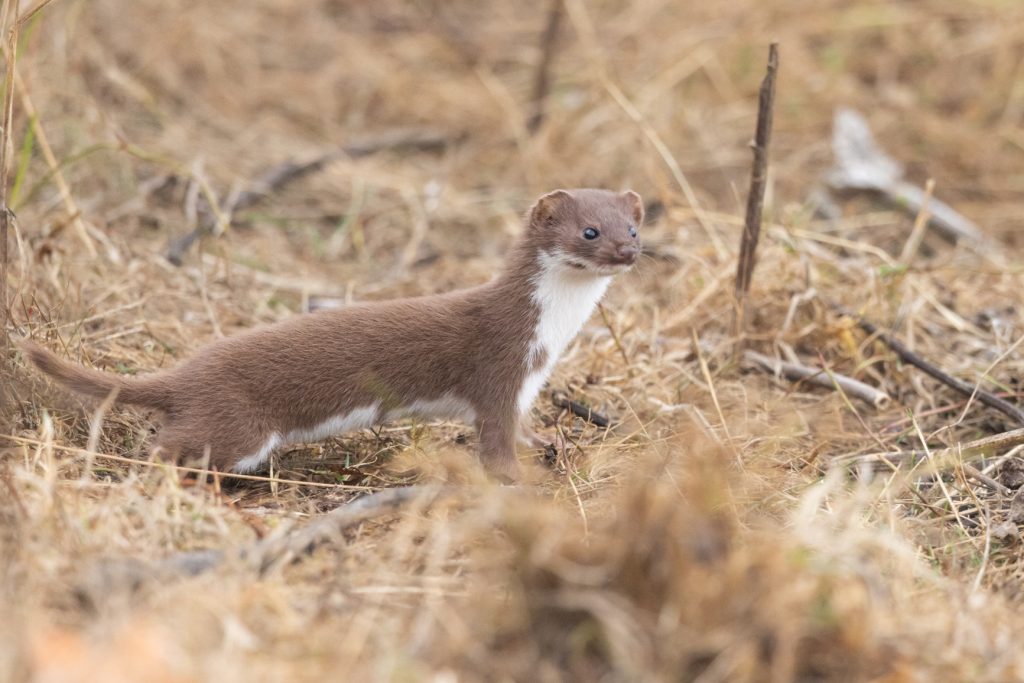
The weasel is the UK’s smallest carnivore and a master of stealth and agility. With its slim, elongated body and short legs, it’s perfectly adapted for hunting in dense vegetation, tunnels, and narrow spaces. Weasels are widespread across the UK and can be found in woodlands, farmland, hedgerows, and even gardens.

Despite their tiny size, they are bold and efficient predators. Weasels are often confused with stoats, but they lack the black-tipped tail that distinguishes stoats, and are generally smaller overall.

  • Size: Around 20–27 cm (nose to tail)
  • Weight: 70–125 grams
  • Colour: Reddish-brown back and head with a white or creamy underside; fur does not change colour in winter
  • Tail: Short and uniformly brown, lacking a black tip (unlike the stoat)
  • Diet: Feeds mainly on small mammals like voles and mice, but also eats birds, insects, and eggs

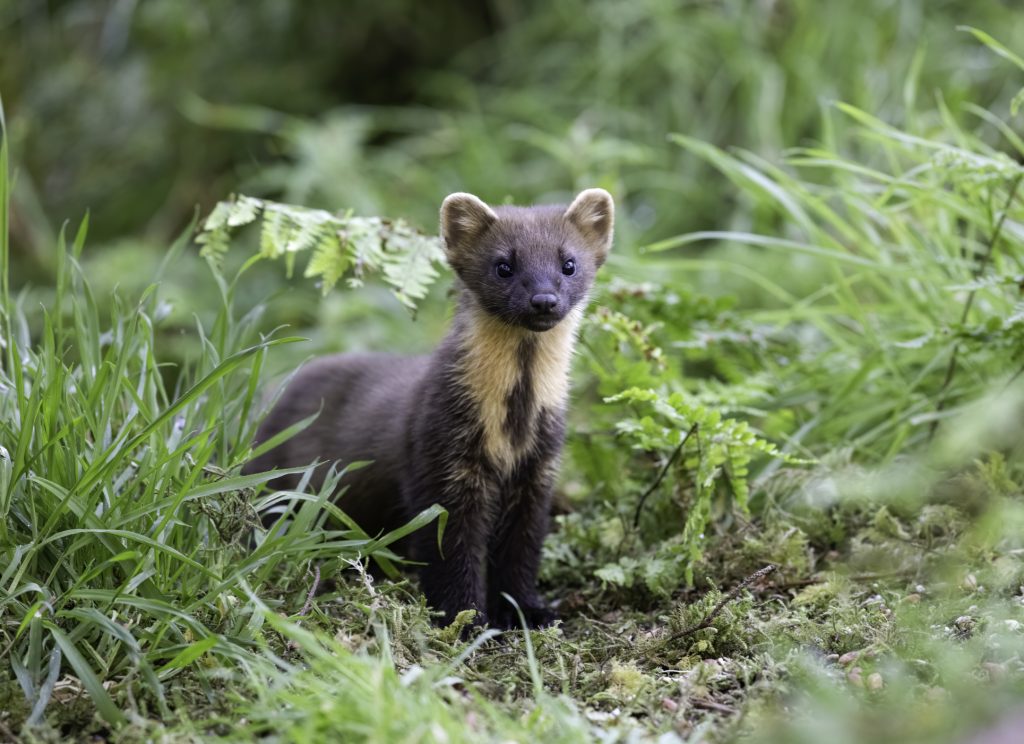
The pine marten is a native UK mammal, now mainly found in Scotland, parts of Wales, northern and central England. Once nearly wiped out due to persecution, it’s now slowly recovering thanks to legal protection. Pine martens prefer woodland habitats and are agile climbers, often moving through trees in search of food.

They have rich brown fur with a creamy-yellow throat patch, a bushy tail, a pointed face, and rounded ears. Mostly nocturnal, they are rarely seen but play an important role in controlling rodent numbers.

  • Size: Around 60–70 cm (nose to tail), fully grown
  • Weight: 9–2.2 kg (males larger than females)
  • Colour: Chocolate brown fur with a distinctive creamy-yellow throat patch
  • Tail: Long, bushy, and brown
  • Diet: Eats small mammals (like voles and mice), birds, insects, fruit, eggs, and carrion